Bronchoscopy in Hisar Bronchoscopy is a medical procedure used to examine the airways and internal structures of the lungs. In addition to identifying abnormalities, this procedure allows doctors to investigate respiratory symptoms and collect samples to be tested in a laboratory. It is common for the procedure to be recommended when other diagnostic tests are not able to provide enough information about a lung or airway condition that needs to be addressed.
If you are searching for bronchoscopy in Hisar, it is likely that you would like to understand why the procedure is performed, how it works, and what to expect during the procedure.
Dr. Jagbir Singh Nehra is a Pulmonary, Critical Care and Sleep Medicine specialist associated with Jindal Hospital, Hisar. Patients experiencing persistent respiratory symptoms can seek pulmonary consultation to understand their diagnostic and treatment options.
What Is Bronchoscopy?
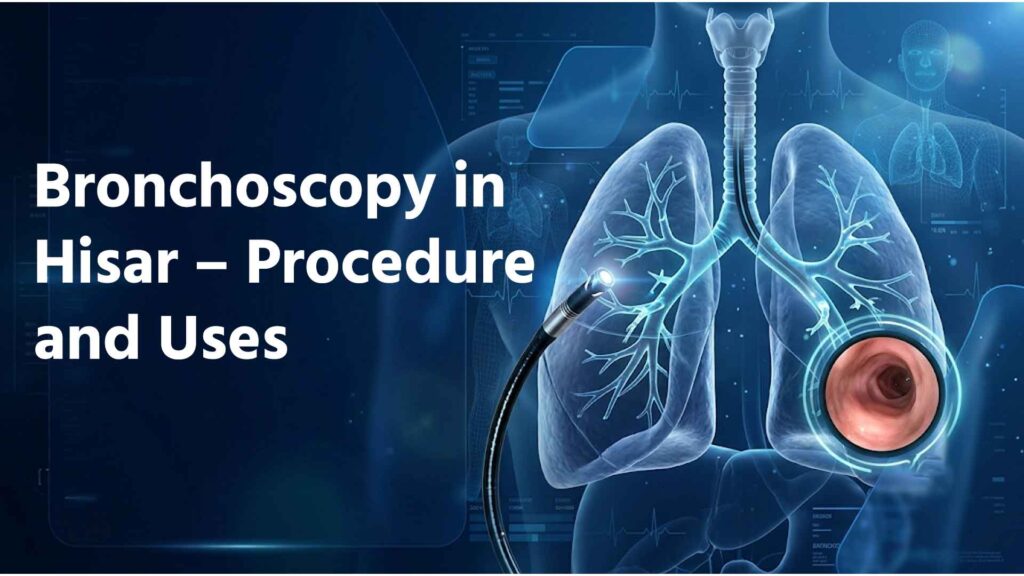
As a diagnostic and sometimes therapeutic procedure, bronchoscopy is an examination of the internal organs of the respiratory tract that allows a doctor to identify and treat any problems.
As part of this procedure, a thin instrument known as a bronchoscope is used. In addition to a small camera, there is usually a small light source that is used to help the doctor see the airways.
It is also possible to use bronchoscopy to provide samples of tissue for tissue analysis, to remove mucus from the lungs, as well as to investigate abnormalities in the lungs depending on the clinical requirements.
There are two commonly used types of bronchoscopy:
1. Flexible Bronchoscopy
A flexible bronchoscopy uses a flexible, thin, bendable tube that can be inserted into the airways through the nose or mouth, allowing for easy access. This type of examination is commonly used in order to collect samples from the respiratory system and to examine the bronchial passages.
2. Rigid Bronchoscopy
Rigid bronchoscopy uses a straight, firm instrument and is generally performed under general anaesthesia. It may be used for selected procedures, such as removing certain airway obstructions or managing significant airway bleeding.
The choice of procedure depends on the patient’s condition and medical requirements.
Why Is Bronchoscopy Recommended?
When it is necessary to perform a bronchoscopy in order to further examine the airways or detect abnormalities in the lungs, a pulmonologist may recommend that procedure.
Common reasons include:
1. Persistent Cough
There may be a need to investigate further the underlying cause of a cough that persists despite initial evaluation and treatment if it persists despite the initial care and treatment.
2. Unexplained Lung Abnormalities
Abnormal findings on a chest X-ray or CT scan may require direct examination or sample collection through bronchoscopy.
3. Investigation of Lung Infections
There are certain infections that can be confirmed by bronchoscopy when routine tests have not provided a clear diagnosis and certain infections are suspected.
4. Suspected Lung Tumours
It is possible, in selected cases, to perform a bronchoscopy to examine suspicious lesions in the airways and to take tissue samples for further analysis as a result of the exam.
5. Blood in Cough
Coughing up blood, also known as haemoptysis, can occur due to several respiratory conditions. Bronchoscopy may be recommended in selected patients to investigate the source of bleeding.
6. Airway Obstruction
An endobronchoscopy is a procedure that is used to detect blockages in the respiratory tract caused by mucus, foreign material, or other abnormalities.
How Is the Bronchoscopy Procedure Performed?
Understanding the procedure can help patients feel more prepared before undergoing an examination.
The exact process depends on the type of bronchoscopy and the patient’s medical condition.
Step 1: Medical Evaluation
Prior to the procedure, the doctor will review the patient’s symptoms, medical history, imaging reports, and medications before beginning the procedure. There may be other tests that need to be performed.
Step 2: Preparation
Patients are given instructions regarding fasting, medication adjustments, and other preparation requirements prior to fasting. Please follow the instructions carefully so that you do not make any mistakes.
Step 3: Anaesthesia or Sedation
For flexible bronchoscopy, local anaesthesia is commonly used to numb the nose and throat. Sedation may also be given when appropriate.
Step 4: Insertion of the Bronchoscope
In order to introduce the bronchoscope to the airways, it is gently introduced through the nose or mouth.
Step 5: Examination and Sample Collection
The doctor examines the respiratory passages. If necessary, mucus, fluid or tissue samples may be collected for laboratory testing.
Step 6: Recovery and Observation
During and after the procedure, the patient is monitored for a period of time to ensure there are no complications. A physician will provide instructions on how to eat, drink, and recover after an injury.
Is Bronchoscopy Painful?
When bronchoscopy is performed, local anaesthesia is usually used. Sedation may also be used if necessary. During the course of the examination, patients may experience temporary coughing, irritation of their throats, or feel as if they are being squeezed.
Some discomfort can occur, but the procedure is generally well tolerated.
The doctor explains the expected experience and possible risks before the procedure.
Is Bronchoscopy Safe?
Bronchoscopy is a commonly performed medical procedure when there is an appropriate clinical indication.
However, like other medical procedures, it carries certain risks.
Possible complications include:
- Temporary coughing
- Sore throat or hoarseness
- Minor bleeding, particularly after a biopsy
- Temporary changes in oxygen levels
- Infection
- Pneumothorax, especially after certain lung biopsies
Depending on the patient’s health and the type of procedure performed, there is a chance that complications may occur.
What Conditions Can Bronchoscopy Help Diagnose?
Bronchoscopy may help investigate several respiratory conditions, including:
- Lung infections
- Pulmonary tuberculosis
- Certain lung tumours
- Airway abnormalities
- Unexplained lung lesions
- Selected cases of interstitial lung disease
- Persistent unexplained respiratory symptoms
Despite the fact that the procedure can be used to diagnose some lung diseases, it cannot diagnose all of them. Depending on the results of imaging tests, blood tests, and lab reports, the results may also need to be compared.
Bronchoscopy Consultation in Hisar
Patients looking for bronchoscopy in Hisar can consult Dr. Jagbir Singh Nehra at Jindal Hospital, Hisar, for evaluation of respiratory symptoms and discussion of suitable diagnostic investigations.
As a Pulmonary, Critical Care, and Sleep Medicine specialist, Dr. Jagbir Singh Nehra treats patients of all ages. Patients experiencing persistent coughing, unexplained lung abnormalities or other respiratory concerns can seek specialist medical advice.
People from nearby locations such as Fatehabad, Bhiwani, Jind, Sirsa and surrounding areas can also visit Hisar for pulmonary consultation.
Whether bronchoscopy is required depends on the patient’s clinical condition and the doctor’s assessment.
When Should You Consult a Pulmonologist?
Consider seeking medical evaluation if you experience:
- Cough lasting several weeks
- Repeated chest infections
- Unexplained blood in sputum
- Persistent breathlessness
- Abnormal chest X-ray or CT scan findings
- Unexplained lung lesions
- Respiratory symptoms that do not improve with initial treatment
In the event that you are coughing up blood, you should seek medical attention immediately. Heavy bleeding or severe breathing difficulty requires emergency medical attention.
Consult Dr. Jagbir Singh Nehra at Jindal Hospital, Hisar
If you have been advised to undergo bronchoscopy or need evaluation for a lung-related condition, consult a pulmonary specialist to understand the procedure, its benefits and possible risks.
Doctor: Dr. Jagbir Singh Nehra
Speciality: Pulmonary, Critical Care and Sleep Medicine
Hospital: Jindal Hospital
Location: Hisar, Haryana
Contact Number: 87662 42929
Contact the hospital to confirm OPD timings, appointment availability and whether the required diagnostic procedure is available.
Frequently Asked Questions About Bronchoscopy
1. What is the main purpose of bronchoscopy?
Bronchoscopy allows doctors to examine the airways, investigate lung abnormalities and collect respiratory or tissue samples for diagnosis.
2. How long does a bronchoscopy procedure take?
A flexible bronchoscopy commonly takes around 15–30 minutes, although the duration can vary depending on the complexity of the examination and sample collection.
3. Is bronchoscopy performed under anaesthesia?
Flexible bronchoscopy is commonly performed with local anaesthesia and sometimes sedation. The anaesthesia method depends on the procedure and patient requirements.
4. Can bronchoscopy detect lung cancer?
Bronchoscopy can help investigate suspicious airway lesions and collect tissue samples for testing. The final diagnosis depends on laboratory and pathology results.
5. How long does recovery take after bronchoscopy?
Many patients recover within a few hours after flexible bronchoscopy. Temporary throat irritation or coughing may occur. Recovery instructions depend on the procedure and sedation used.
6. Is bronchoscopy used for tuberculosis diagnosis?
Yes. In selected patients, bronchoscopy can help collect respiratory samples for tuberculosis testing when routine sputum investigations are insufficient or difficult to obtain.
7. Where can I consult a pulmonologist for bronchoscopy in Hisar?
Patients can consult Dr. Jagbir Singh Nehra at Jindal Hospital, Hisar, for evaluation and advice regarding bronchoscopy and other pulmonary investigations.
Medical Disclaimer: This article is for general educational purposes only. The need for bronchoscopy, its benefits and potential risks should be discussed with a qualified medical specialist.